ABANBANG MACHINERYFOOD PROCESSING SYSTEMSRequest a configuration

FOOD VACUUM & ATMOSPHERE PACKAGING

Industrial Vacuum Packaging Machines

Compare double-chamber, rolling, thermoforming, modified-atmosphere, tray, premade-pouch and skin-packaging systems around your food, package and target output.

PROCESS BEFORE MACHINES

Start with the product and finished pack.

Packaging-machine selection changes with the food, product temperature and moisture, required package presentation, shelf-life objective, pouch or tray material, pack dimensions, seal requirements, loading method and target output.

That is why this page explains the selection logic without publishing unconfirmed capacity, energy or price figures.

TYPICAL PROCESS FLOW

Connected stages, planned as one line.

The exact route is confirmed after the product and plant brief. Optional steps may be added, removed or adjusted.

  1. 01Define the food and packaging objective
  2. 02Confirm product condition and pack size
  3. 03Select pouch, tray or rollstock format
  4. 04Confirm loading and product infeed
  5. 05Vacuum, gas exchange or skin-pack step
  6. 06Seal, cut and discharge
  7. 07Check seal, label and finished pack
  8. 08Connect upstream and downstream handling

CONFIGURATION LOGIC

How the line is configured.

Each module should support the steps before and after it. Selection is based on your confirmed product route rather than a generic machine list.

01

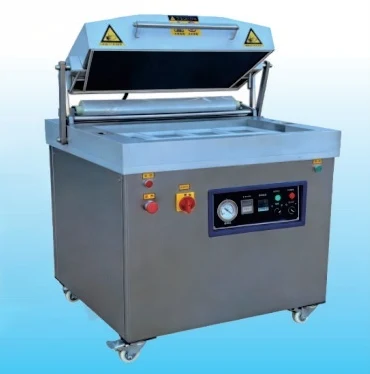
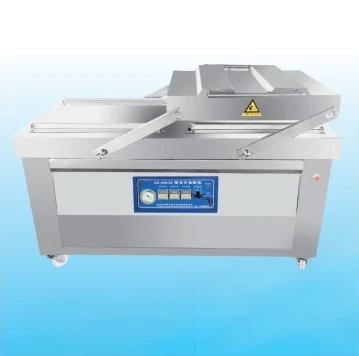
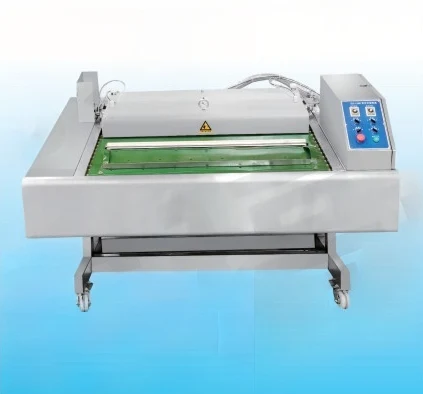
Double-chamber and rolling vacuum packers

Double-chamber machines support repeatable batch packing, while rolling vacuum machines move filled pouches through sequential vacuum and sealing cycles. Product, pouch and loading method determine the suitable format.

02

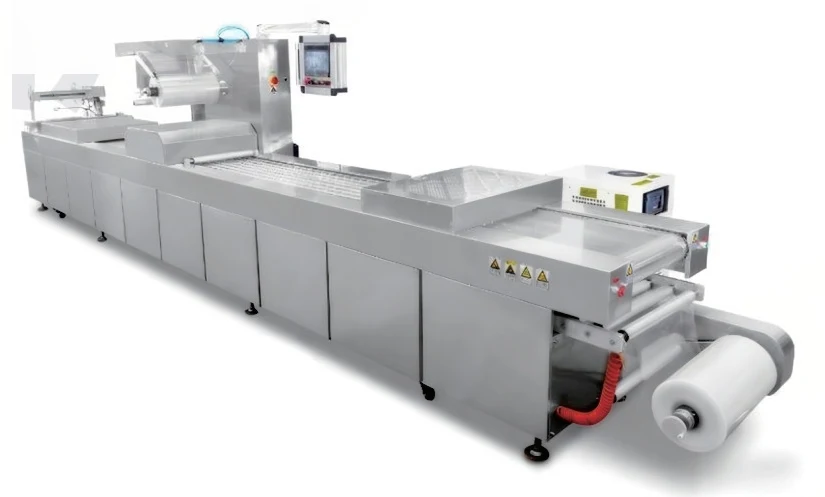
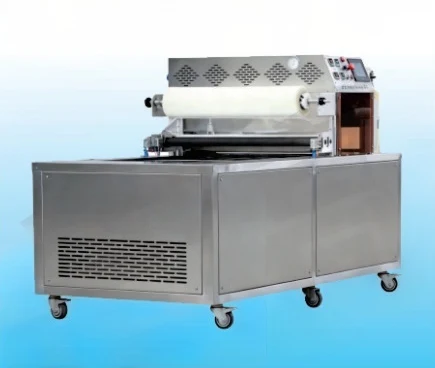
Thermoforming vacuum packaging

Rollstock systems form the lower web, receive the product, apply vacuum and sealing, then cut the finished packs. Forming depth, web width, product dimensions and line integration must be confirmed.

03

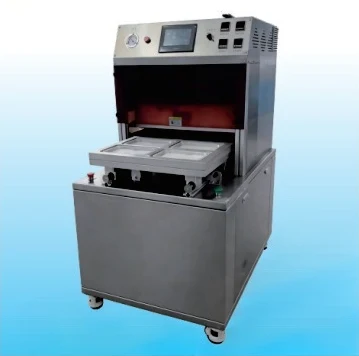
MAP, tray and skin packaging

Modified-atmosphere tray packaging, boxed MAP and skin-pack formats are evaluated around tray dimensions, gas or vacuum requirements, product presentation, sealing film and target output.

04

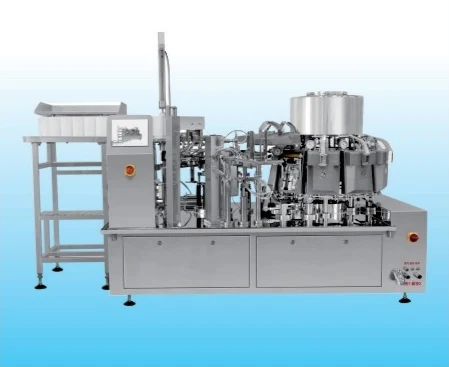
Premade-pouch and automatic handling

Premade-pouch vacuum systems, continuous skin-pack machines and connected conveyors can be planned where automatic pouch feeding, product loading, sealing and discharge match the confirmed process.

SPECIFY THE FINISHED PACK

Bring a sample, not just a machine name.

The catalog formats above are starting points. Confirm the food and the filled package before comparing dimensions, automation or output.

Food condition

Describe temperature at packing, free liquid, stickiness, sharp bones or edges, and sensitivity to compression. Include the intended product arrangement. These details guide handling and sample evaluation; one setting cannot be assumed suitable for every food.

Package specification

Supply filled dimensions, weight, material structure and sealing specification. For pouches, include the opening and usable seal area; for trays, the flange and lidding film; for rollstock, film widths, forming depth and intended pack layout.

Presentation and process

Specify conventional vacuum, modified atmosphere (MAP), vacuum skin or a seal-only pack. State the desired appearance and handling requirements. Confirm available process modes for the selected model rather than treating these terms as interchangeable.

PACKS, PEOPLE & CHANGEOVERS

Compare productive output, not a headline speed.

Define the same pack, food condition and operating period when comparing packaging-machine quotations.

Packs per cycle

Review the actual chamber or tooling layout with filled packages. Seal length, product height and spacing can constrain the load. Nominal packs per hour equals packs per cycle multiplied by cycles per hour; this arithmetic is not an Anbang performance rating.

Loading and replenishment

Include placing the product, keeping the seal area clear, unloading and supplying pouches, trays or film. Identify the operator count and any automatic dosing separately. The slowest connected operation can limit sustained output.

Product mix

List pack sizes, daily quantities and expected changes. Ask about tooling, film changes and cleaning access for that mix. Compare saleable packs per shift after agreed stops and rejects, not a short test on the easiest format.

COMPLETE THE PURCHASE BRIEF

Confirm utilities, interfaces and acceptance.

Use these fields to identify what the quotation includes and what the factory must provide.

Power, air and gas

Provide voltage, phase, frequency and compressed-air availability. For MAP, confirm the required gas supply and product-specific gas specification separately. Ask whether the pump, compressor, gas mixing or other utility equipment is included; do not assume it comes with the packer.

Line and quality checks

Share conveyor heights, loading and discharge arrangements, space and cleaning requirements. Agree sample-pack checks for seal integrity, appearance and the selected packaging process. Coding, weighing or inspection equipment must be listed explicitly if required.

If sealed packs will undergo high-temperature processing, review the food sterilization retort selection guide. Vacuum packaging alone does not make a pouch or tray retort-compatible; confirm materials, seals and the validated thermal process separately.

BEFORE MACHINE SELECTION

Information needed for a recommendation.

Share what you already know. If any field is not decided, Anbang can list the options that need confirmation.

CAPACITY & PRICE

Why a confirmed brief comes first.

Capacity and price cannot be determined accurately from the words “vacuum packaging machine” alone. Final configuration depends on the food and package, manual or automatic loading, chamber or forming format, sealing length, vacuum and gas requirements, inspection and coding, conveyor integration, utilities, hygiene requirements and delivery scope.

Anbang provides a project-specific recommendation after these inputs are reviewed.

BUYER QUESTIONS

Questions to answer before quotation.

01Which food vacuum packaging machine should I choose?

Start with the filled pack, food condition and required saleable packs per shift. Compare premade pouches, premade trays and rollstock before choosing the loading and sealing arrangement. Send package samples or supplier specifications for a configuration review.

02How do double-chamber and rolling vacuum packers differ?

Both can process prepared pouches in chamber cycles. A double-chamber machine alternates working chambers; a rolling format transfers pouch loads on a belt. Compare the filled-pouch layout, loading effort, cycle and discharge arrangement rather than assuming a belt makes every operation continuous.

03When should I consider thermoforming instead of premade pouches?

Thermoforming creates packs from rollstock and connects forming, loading, sealing and cutting. Review it against the number of pack formats, forming depth, film specification, loading method and tooling scope. A premade-pouch workflow starts with an already manufactured bag.

04Are tray sealing, MAP and vacuum skin packaging the same?

No. A tray describes the container, while MAP describes a controlled package atmosphere and skin packaging describes a close-fitting film presentation. A tray machine does not automatically support every process. Confirm the required mode, tooling, film and food compatibility.

05Does an automatic premade-pouch machine include product dosing?

Do not assume so. Ask whether pouch feeding, opening, dosing, vacuum, sealing and discharge are included, and which stages need separate equipment or manual work. Product consistency, particles, liquids and pouch features affect the configuration.

06How should packaging-machine capacity be compared?

Use saleable packs per productive shift for the same product, pack size and process. Include loading, vacuum or gas steps, sealing, discharge, film or pouch replenishment, format changes and rejects. A cycle rate without the pack layout is not a complete output specification.

07Can vacuum or MAP guarantee food shelf life?

No. The food, hygiene controls, packaging material, seal integrity and storage conditions must be evaluated together. Gas composition, vacuum targets and shelf life require product-specific confirmation and validation; the equipment name alone does not establish them.

08What determines the price of a vacuum packaging machine?

Align the pack and output specification first. Compare machine format, pump arrangement, tooling, loading or dosing, gas requirements, controls, inspection, utilities and delivery scope. Ask which format sets, installation, training and spares are included.
START WITH YOUR PROCESS

Send your product and output target.

The prepared message asks for the details needed to discuss a practical configuration and quotation.